South Maroubra Walk
South Maroubra Walk
Maroubra Beach, NSW - Australia
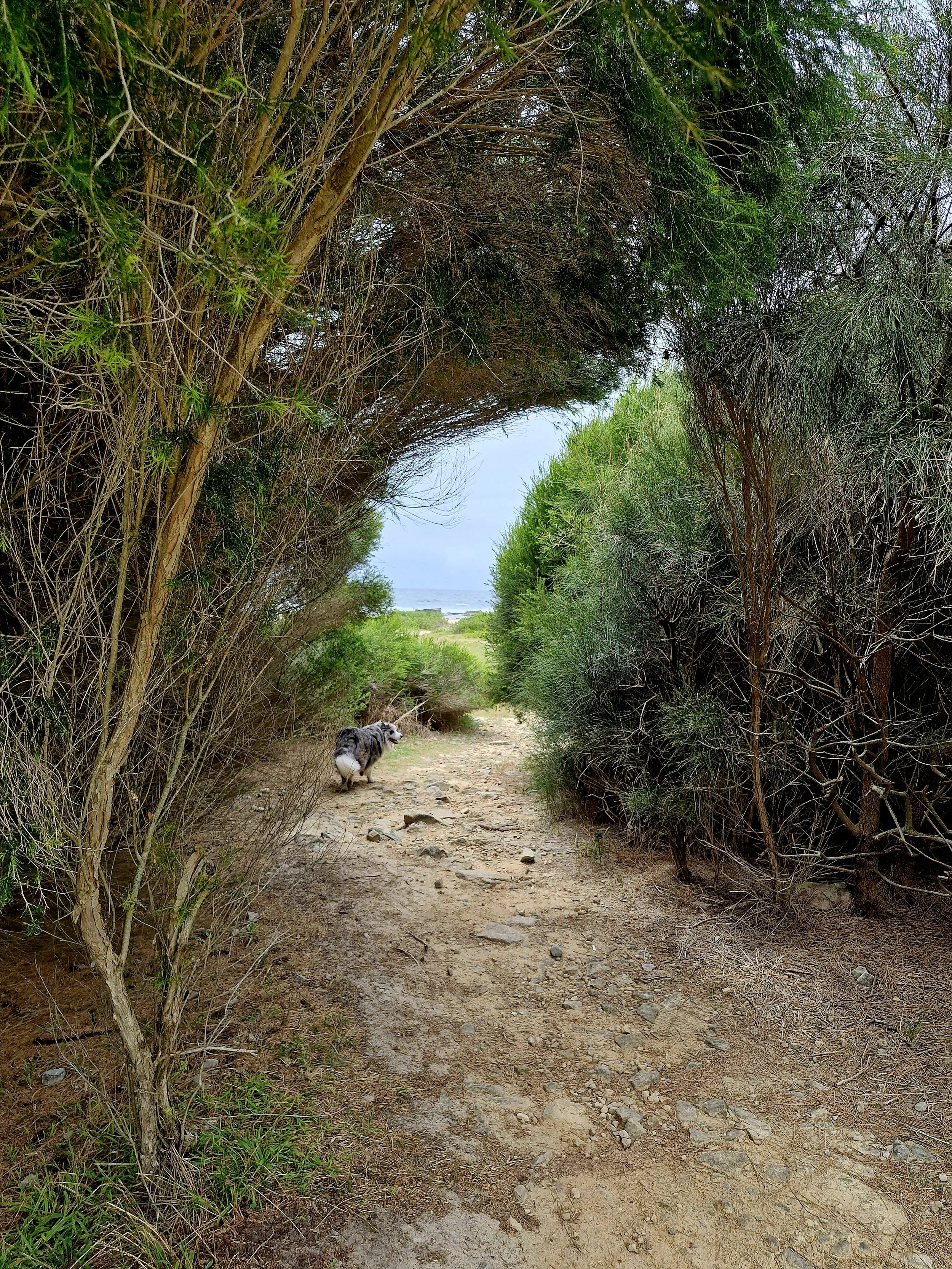
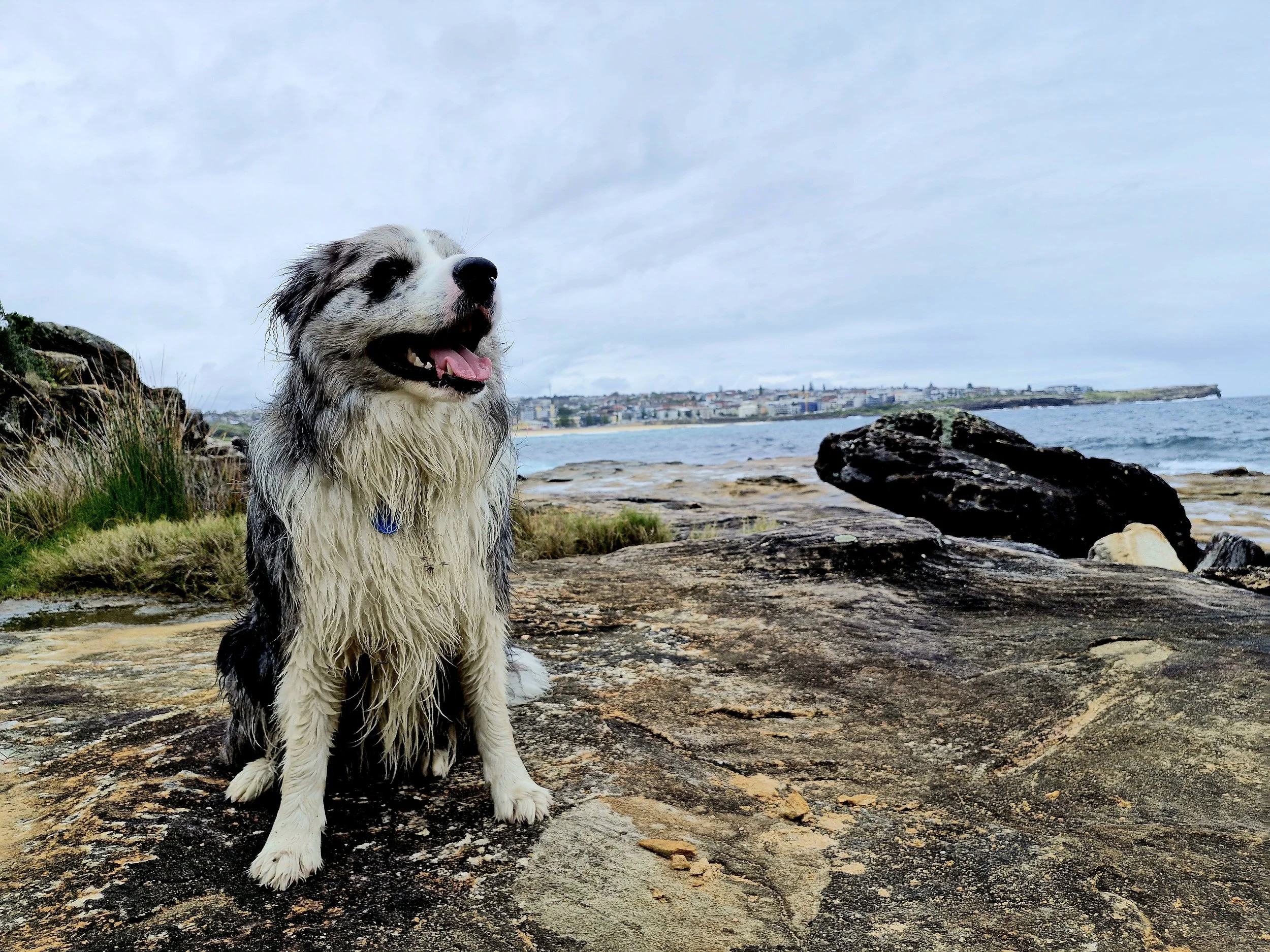
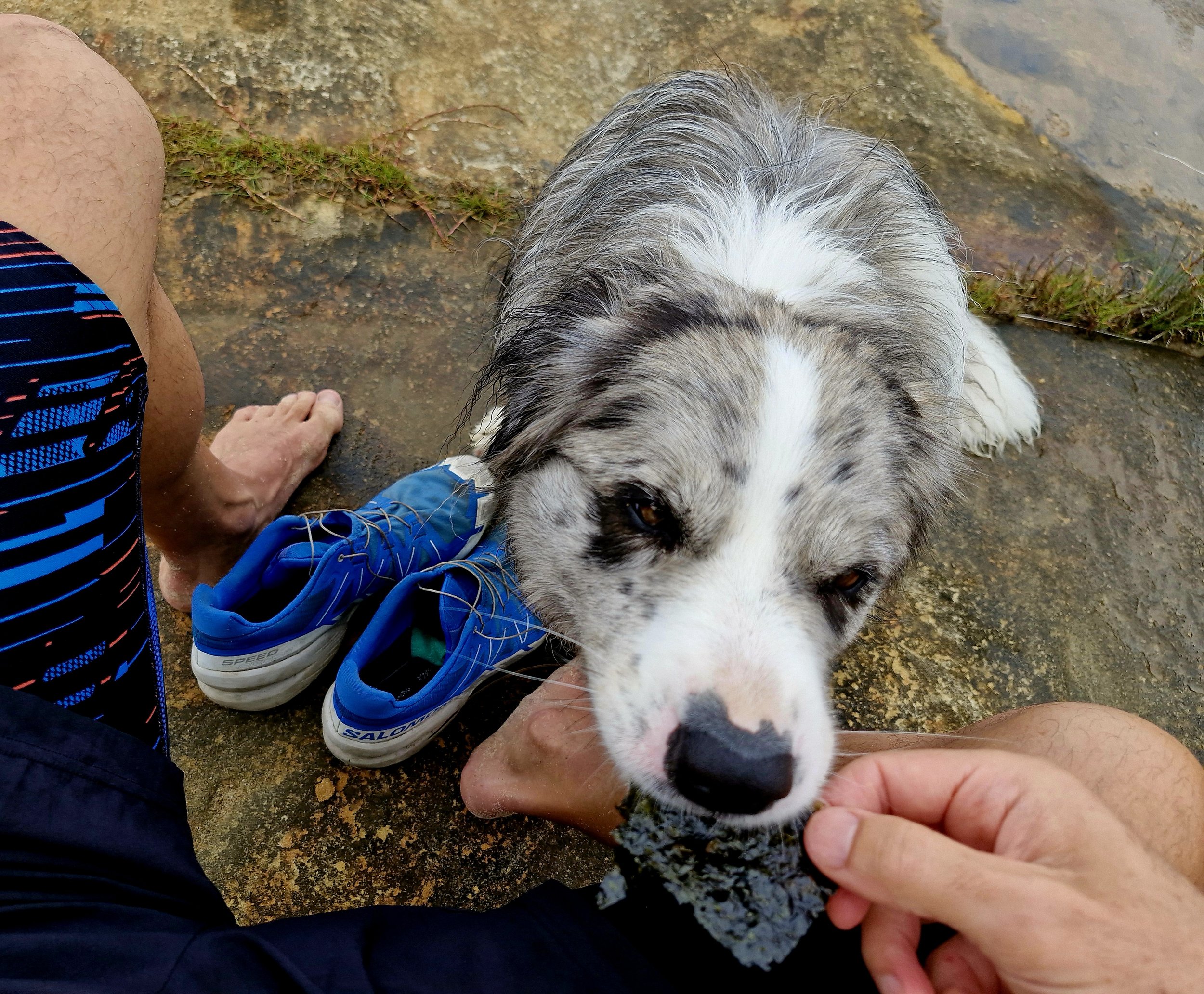
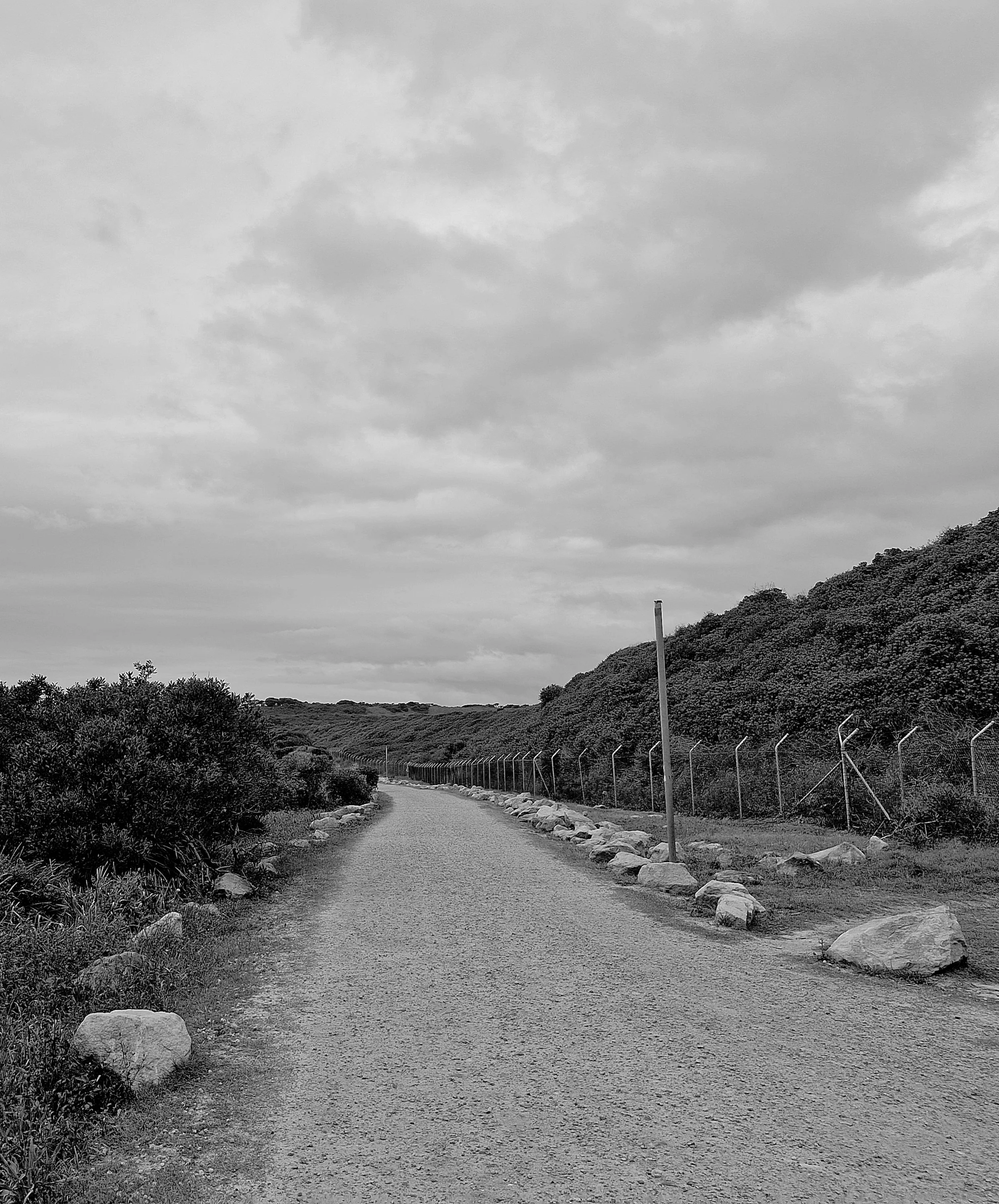
Stretching along Sydney’s rugged eastern coastline, the Maroubra Walk carries you across open headlands, wind-shaped paths, and long views that extend all the way to the horizon. This route is exposed, bright, and fully coastal, a landscape defined by salt air, crashing waves, and the steady rhythm of the Pacific.
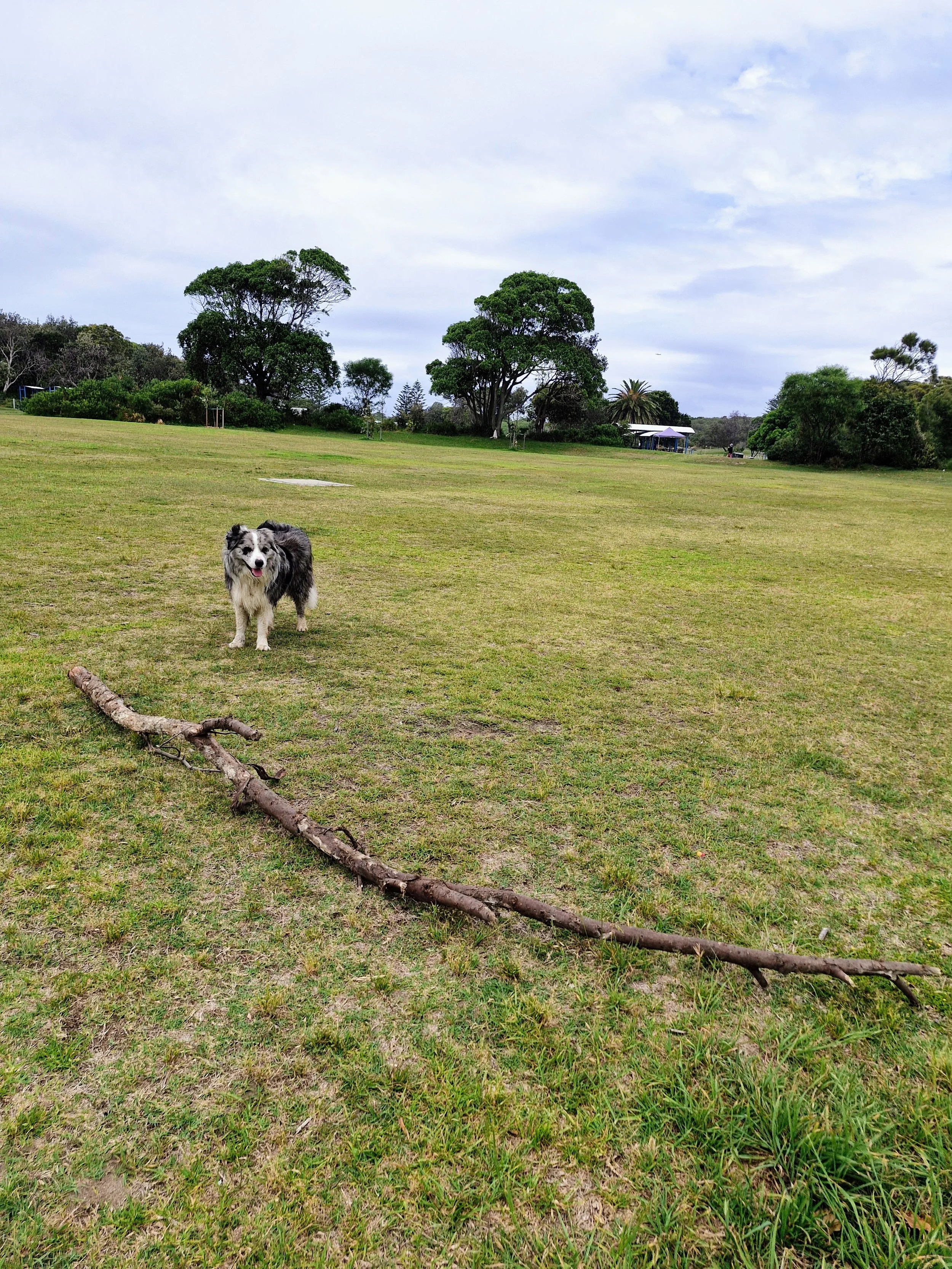
The walk follows a sequence of concrete paths, compact trails, and rocky sections, creating a flow that shifts with the coastline itself. For dogs, it is a highly stimulating environment: wide visual fields, strong ocean smells, seabirds overhead, and the textured surfaces of the headland all demand sensory attention. For humans, the openness provides something equally restorative, space to breathe, move, and recalibrate.
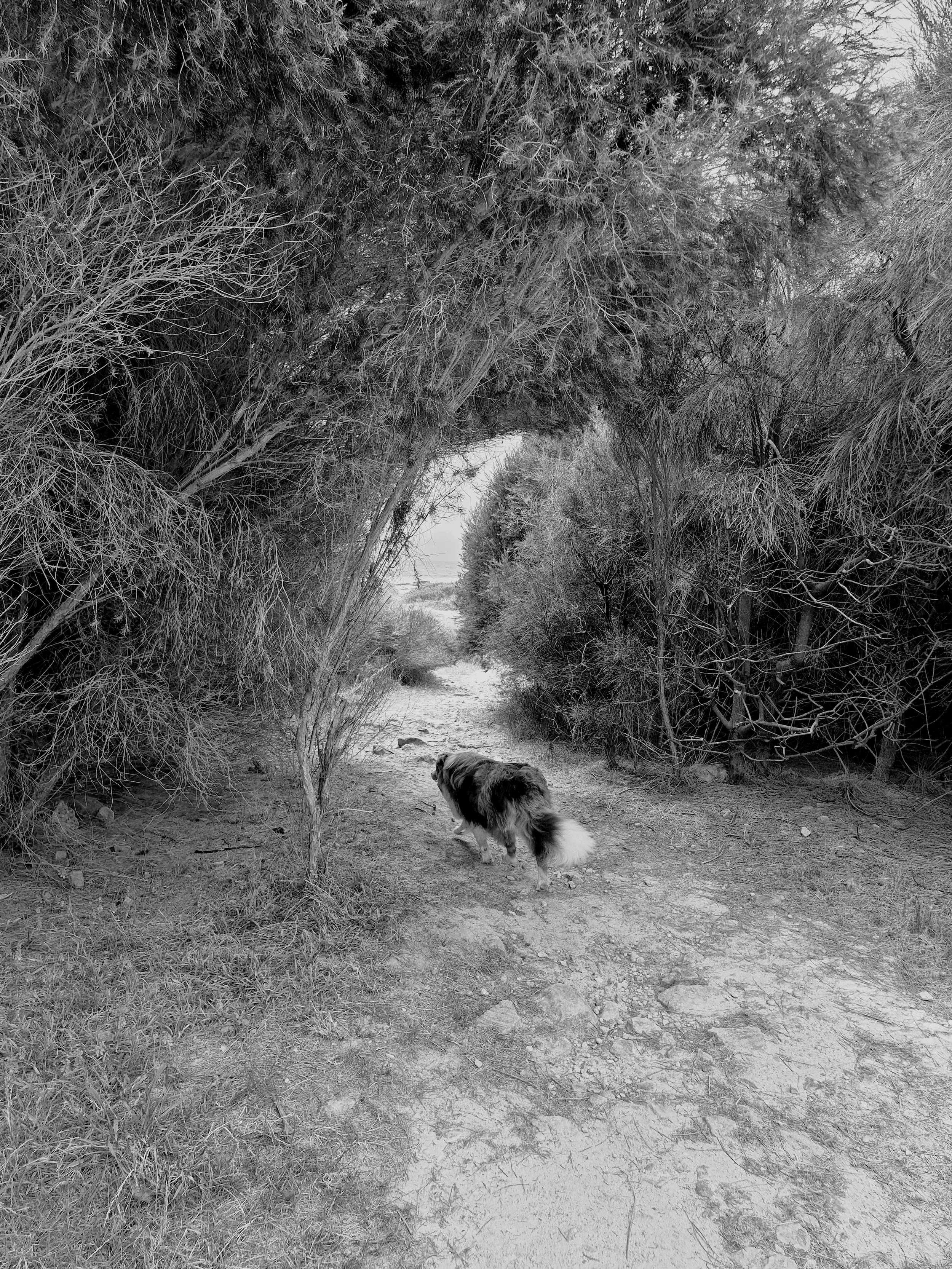
Even though the route is longer and more physically demanding, South Maroubra feels expansive rather than intense, offering a mix of distance, elevation, and ocean energy that makes the walk grounding for you and endlessly engaging for an active Border Collie exploring at your side.
-

70 minutes of Zone 1–2 aerobic conditioning.
Seiler, S. (2010). What is best practice for training intensity and duration distribution in endurance athletes? International Journal of Sports Physiology and Performance, 5(3), 276–291.
-

3.05 km with 137m elevation for lower-limb strength.
Millet, G. Y., & Lepers, R. (2004). Alterations of neuromuscular function after prolonged running. Exercise and Sport Sciences Reviews, 32(1), 34–39.
-
Avg HR 100 bpm indicating parasympathetic recovery.
Stanley, J., Peake, J. M., & Buchheit, M. (2013). Cardiovascular parasympathetic reactivation after exercise: implications for recovery. Sports Medicine, 43(12), 1035–1057.
-
Bluey likely covered 7km through natural herding patterns.
Riemer, S., Müller, C., Virányi, Z., Huber, L., & Range, F. (2018). Individual differences in dogs’ exploratory behaviour and distance covered during walks. Animal Behaviour, 135, 131–141.
-

27 minutes of sniffing supporting cortisol reduction.
Horowitz, A. (2017). Smelling themselves: Dogs' investigation of their own odours. Behavioural Processes, 143, 17–24.
-
347 calories - 76% movement time enhancing aerobic efficiency.
Brooks, G. A. (2020). The science and translation of lactate shuttle theory. Cell Metabolism, 31(2), 228–249.
-
Terrain variability improving proprioception.
McGowan, C. M., Goff, L., & Stubbs, N. (2007). Proprioception and performance in athletic dogs. The Veterinary Journal, 173(1), 158–165.
-

Outdoor exposure supporting serotonin and circadian health.
Lambert, G. W., Reid, C., Kaye, D. M., Jennings, G. L., & Esler, M. D. (2002). Effect of sunlight and season on serotonin turnover in the brain. The Lancet, 360(9348), 1840–1842.